
Download this complimentary Whitepaper today!
This Whitepaper hopes to provide scientists and engineers with more information on selecting biocompatible adhesives that meet sterilization, thermal, and chemical resistance requirements, allowing you to make more informed material decisions in your medical device design process.
What you will learn about:
- The key differences between epoxy, silicone, cyanoacrylate, and UV/LED curable adhesive systems for medical applications
- How to determine which biocompatibility standard — USP Class VI or ISO 10993-5 — applies to your device
- Which adhesive families are compatible with specific sterilization methods such as autoclaving, EtO, gamma radiation, and chemical immersion
- How to assess trade-offs between functional performance properties like temperature resistance, bond strength, and ease of manufacturing
Click ‘LOOK INSIDE’ to Download Now.
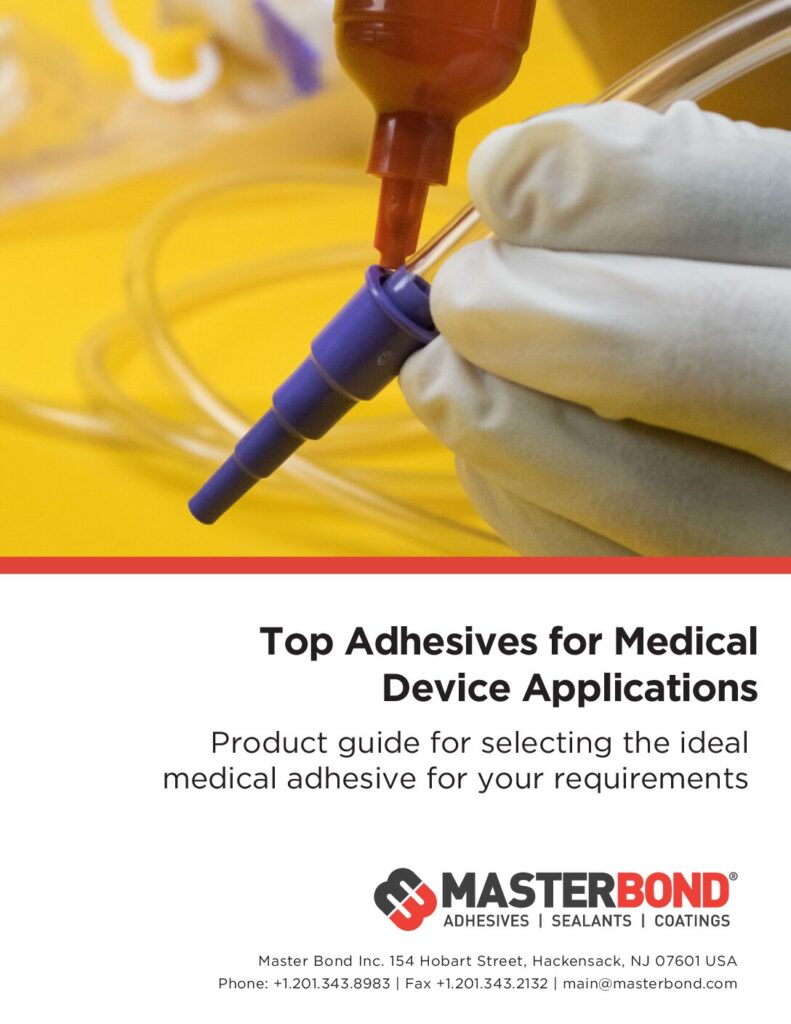
IEEE Spectrum and Wiley are proud to bring you this white paper, sponsored by Master Bond Inc.
More Information
This product guide from Master Bond presents a range of medical-grade adhesives designed for device manufacturing. It covers epoxies, silicones, cyanoacrylates, and UV/LED curable systems, each tested against biocompatibility standards including USP Class VI and ISO 10993-5. The guide highlights key selection criteria such as sterilization resistance (autoclaving, EtO, gamma radiation, chemical immersion), thermal performance, chemical resistance, and electrical properties. Case studies demonstrate real-world applications in prosthetics, implantable sensors, and diagnostic devices. The guide emphasizes that adhesive selection should be a systems-level decision made early in the design process to avoid performance and manufacturability trade-offs.
Sponsored by

Partnered with

IEEE Spectrum Magazine, the flagship publication of the IEEE, explores the development, applications and implications of new technologies. It anticipates trends in engineering, science, and technology, and provides a forum for understanding, discussion and leadership in these areas.