Download this complimentary Infographic today!
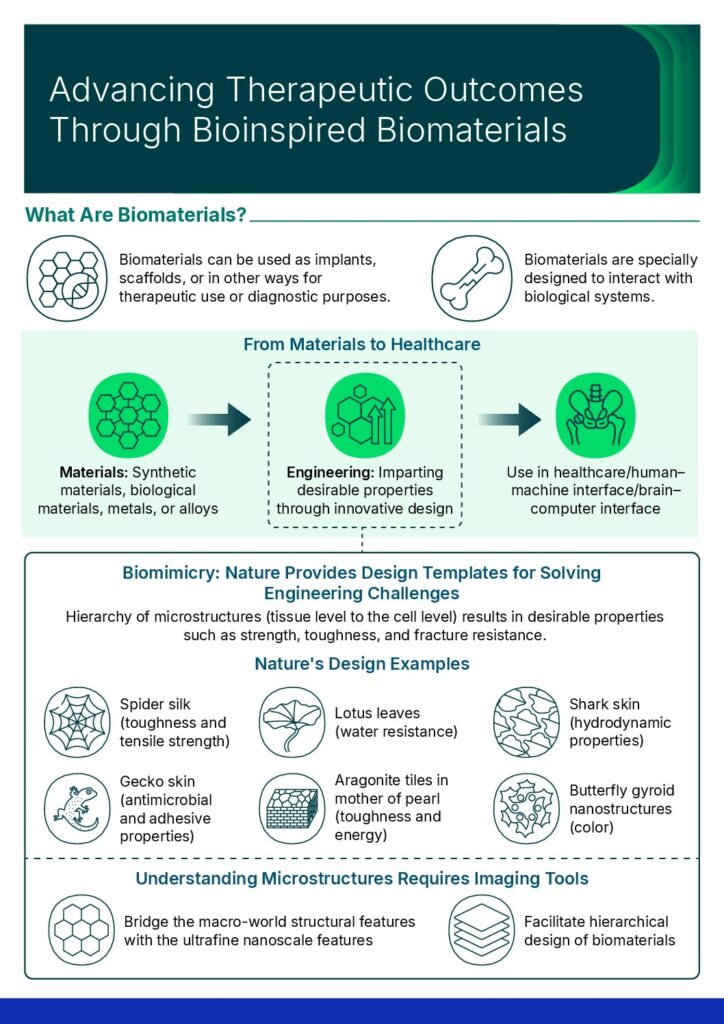
This Infographic provides researchers with essential information on bioinspired biomaterials design, allowing you to further your research in developing advanced therapeutic materials with self-healing, adhesive, and adaptive properties inspired by nature.
What you will learn about:
- How nature’s hierarchical microstructures provide design templates for engineering biomaterials with superior properties
- ZEISS integrated microscopy solutions spanning from stereo light microscopy to field-emission SEM for multi-scale characterization
- Understanding mussel adhesion mechanisms through correlative imaging and force measurement tools
- Real-world applications in self-healing hydrogels, coacervate adhesives, wearable electronics, and biomedical devices
Click ‘LOOK INSIDE’ to Download Now.

More Information
Biomaterials are specially designed materials that interact with biological systems for therapeutic or diagnostic purposes. Nature provides exceptional design templates through biomimicry—from spider silk’s toughness to gecko skin’s antimicrobial properties. Understanding these hierarchical microstructures from tissue level to cell level requires advanced imaging tools that bridge macro-world structural features with ultrafine nanoscale details. ZEISS integrated microscopy solutions enable multi-scale, multi-modal, and in situ characterization to link microstructures with properties, processes, and material performance. This infographic demonstrates how correlative imaging techniques reveal the molecular forces behind mussel adhesion and support the development of innovative biomaterials including self-healing hydrogels, adaptive adhesives, and bioinspired flexible electronics for healthcare applications.
Brought to you by

Sponsored by